
<?xml version="1.0" encoding="UTF-8"?><!-- generator="wordpress/2.0.2" -->
<rss version="2.0" 
	xmlns:content="http://purl.org/rss/1.0/modules/content/">
<channel>
	<title>Comments on: Law 8: Trust</title>
	<link>http://lawsofsimplicity.com/2006/07/23/law-8-trust/</link>
	<description>simplicity resources for design, business, technology, and life</description>
	<pubDate>Sun, 14 Mar 2010 07:53:45 +0000</pubDate>
	<generator>http://wordpress.org/?v=2.0.2</generator>

	<item>
		<title>by: Vicky</title>
		<link>http://lawsofsimplicity.com/2006/07/23/law-8-trust/#comment-9358</link>
		<pubDate>Mon, 16 Feb 2009 17:47:26 +0000</pubDate>
		<guid>http://lawsofsimplicity.com/2006/07/23/law-8-trust/#comment-9358</guid>
					<description>Good evening!
First, I'd like to mark that this post is not actually be going to be a comment on this particular law because I just didn't manage to find the right page for responses on the book in general.
Second, some problems I came across might have been caused by an improper translation of the book as I don't have the original, in this case I bring my apologise beforehand.

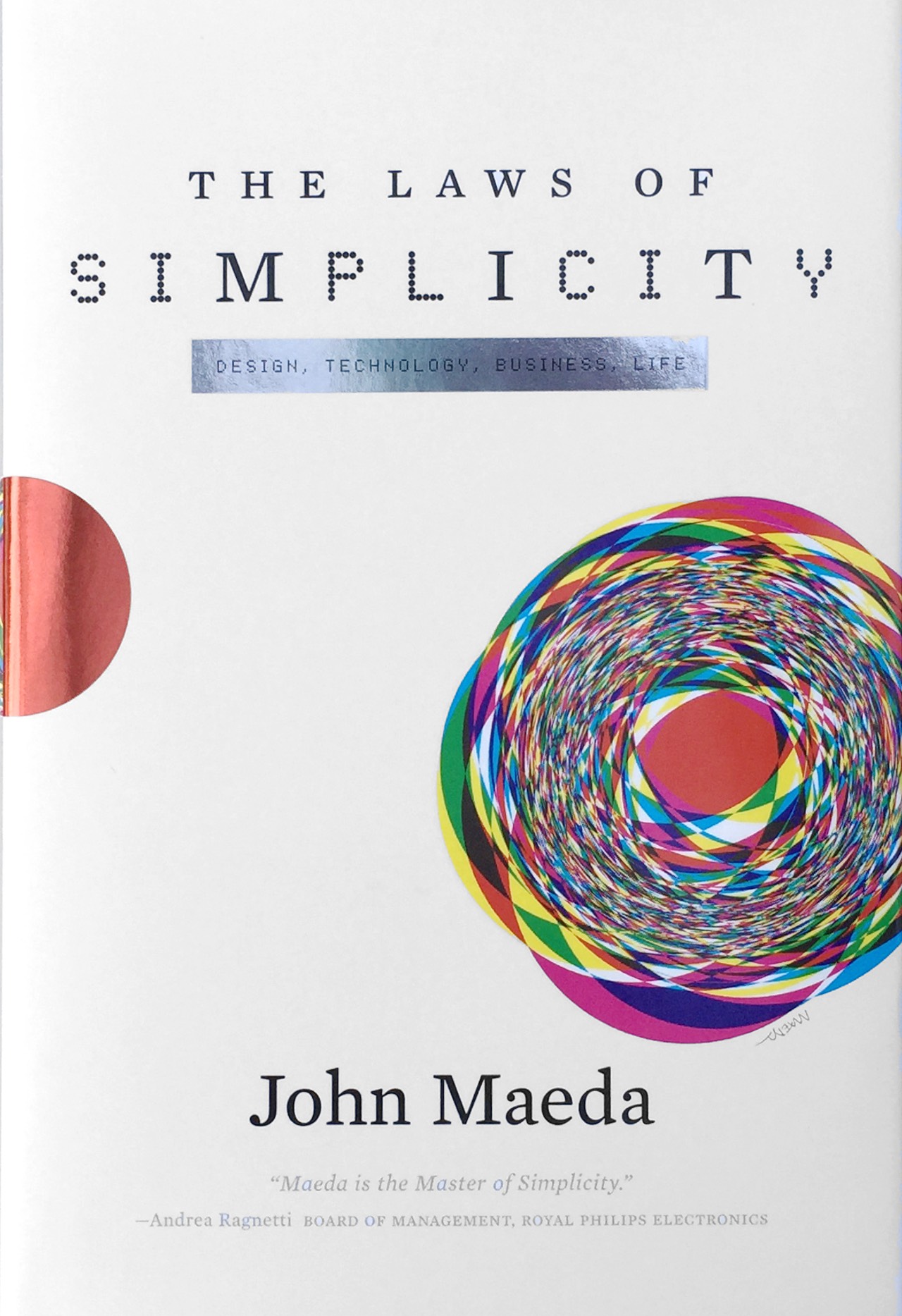
First of all, I have been reading your book for almost 2 weeks because it no way makes an easy reading and I just couldn't stand reading it longer than 20 minutes at a time. In lots of parts it is made too short because of your attempts of making it easier, as a result half of the laws look unfinished (due to your desire of finishing it earlier?) and sometimes even hard to agree with, lacking proofs and at the same time including too many details in examples provided.
Another thing is that you put too many links for your website into the book trying to shorten it, but in fact it didn't make it look easier - on the contrary, it made it look scary. Simplicity stands for no artificial frames, as I see it.

Considering your idea about simple devices as tiny devices I can say that I can by no means accept it - most tiny devices do look complicated unlike larger ones for several reasons: they are more convenient, they even look more usable, the more free space is on the surface the simplier the thing looks. That's why cheap cell phones for kids and elderly people will hardly ever be made smaller (despite nowadays smaller size doesn't cause serious increase in price).

But although there were some other points I found unecceptable, I'd like to thank you for the book as I found it quite inspiring and informative as my knowledge in design is based on nothing but my own views (I study international economics). So, thank you. :)</description>
		<content:encoded><![CDATA[<p>Good evening!<br />
First, I&#8217;d like to mark that this post is not actually be going to be a comment on this particular law because I just didn&#8217;t manage to find the right page for responses on the book in general.<br />
Second, some problems I came across might have been caused by an improper translation of the book as I don&#8217;t have the original, in this case I bring my apologise beforehand.</p>
<p>First of all, I have been reading your book for almost 2 weeks because it no way makes an easy reading and I just couldn&#8217;t stand reading it longer than 20 minutes at a time. In lots of parts it is made too short because of your attempts of making it easier, as a result half of the laws look unfinished (due to your desire of finishing it earlier?) and sometimes even hard to agree with, lacking proofs and at the same time including too many details in examples provided.<br />
Another thing is that you put too many links for your website into the book trying to shorten it, but in fact it didn&#8217;t make it look easier - on the contrary, it made it look scary. Simplicity stands for no artificial frames, as I see it.</p>
<p>Considering your idea about simple devices as tiny devices I can say that I can by no means accept it - most tiny devices do look complicated unlike larger ones for several reasons: they are more convenient, they even look more usable, the more free space is on the surface the simplier the thing looks. That&#8217;s why cheap cell phones for kids and elderly people will hardly ever be made smaller (despite nowadays smaller size doesn&#8217;t cause serious increase in price).</p>
<p>But although there were some other points I found unecceptable, I&#8217;d like to thank you for the book as I found it quite inspiring and informative as my knowledge in design is based on nothing but my own views (I study international economics). So, thank you. <img src='http://lawsofsimplicity.com/wp-includes/images/smilies/icon_smile.gif' alt=':)' class='wp-smiley' />
</p>
]]></content:encoded>
				</item>
	<item>
		<title>by: Josie</title>
		<link>http://lawsofsimplicity.com/2006/07/23/law-8-trust/#comment-9204</link>
		<pubDate>Fri, 09 Jan 2009 21:37:34 +0000</pubDate>
		<guid>http://lawsofsimplicity.com/2006/07/23/law-8-trust/#comment-9204</guid>
					<description>I want to get some weed</description>
		<content:encoded><![CDATA[<p>I want to get some weed
</p>
]]></content:encoded>
				</item>
	<item>
		<title>by: Josie</title>
		<link>http://lawsofsimplicity.com/2006/07/23/law-8-trust/#comment-9203</link>
		<pubDate>Fri, 09 Jan 2009 21:36:04 +0000</pubDate>
		<guid>http://lawsofsimplicity.com/2006/07/23/law-8-trust/#comment-9203</guid>
					<description>I want to google and simply gogle</description>
		<content:encoded><![CDATA[<p>I want to google and simply gogle
</p>
]]></content:encoded>
				</item>
	<item>
		<title>by: Josie</title>
		<link>http://lawsofsimplicity.com/2006/07/23/law-8-trust/#comment-9202</link>
		<pubDate>Fri, 09 Jan 2009 21:34:04 +0000</pubDate>
		<guid>http://lawsofsimplicity.com/2006/07/23/law-8-trust/#comment-9202</guid>
					<description>I want to google for simple aswers</description>
		<content:encoded><![CDATA[<p>I want to google for simple aswers
</p>
]]></content:encoded>
				</item>
	<item>
		<title>by: Pascal Chirol</title>
		<link>http://lawsofsimplicity.com/2006/07/23/law-8-trust/#comment-8908</link>
		<pubDate>Mon, 25 Aug 2008 14:29:15 +0000</pubDate>
		<guid>http://lawsofsimplicity.com/2006/07/23/law-8-trust/#comment-8908</guid>
					<description>Can we use this law for &quot;LOVE&quot; ? 
You use a heart in front of the rules ! 
Do you think love can be simple ?
Does simplifying love give more means ?!

...
In love we trust.</description>
		<content:encoded><![CDATA[<p>Can we use this law for &#8220;LOVE&#8221; ?<br />
You use a heart in front of the rules !<br />
Do you think love can be simple ?<br />
Does simplifying love give more means ?!</p>
<p>&#8230;<br />
In love we trust.
</p>
]]></content:encoded>
				</item>
	<item>
		<title>by: Igor Pismensky</title>
		<link>http://lawsofsimplicity.com/2006/07/23/law-8-trust/#comment-7738</link>
		<pubDate>Thu, 04 Oct 2007 15:28:35 +0000</pubDate>
		<guid>http://lawsofsimplicity.com/2006/07/23/law-8-trust/#comment-7738</guid>
					<description>Some 45 years ago, my shop teacher stressed KISS or &quot;Keep It Simple Stupid&quot;. I've tried to do so ever since with various degrees of success. I've found that if done correctly, there are two byproducts. The first elegance and the second that it becomes instinctual or as Ash Donaldson said &quot;familiar&quot;.</description>
		<content:encoded><![CDATA[<p>Some 45 years ago, my shop teacher stressed KISS or &#8220;Keep It Simple Stupid&#8221;. I&#8217;ve tried to do so ever since with various degrees of success. I&#8217;ve found that if done correctly, there are two byproducts. The first elegance and the second that it becomes instinctual or as Ash Donaldson said &#8220;familiar&#8221;.
</p>
]]></content:encoded>
				</item>
	<item>
		<title>by: Ash Donaldson</title>
		<link>http://lawsofsimplicity.com/2006/07/23/law-8-trust/#comment-7729</link>
		<pubDate>Sat, 29 Sep 2007 00:00:41 +0000</pubDate>
		<guid>http://lawsofsimplicity.com/2006/07/23/law-8-trust/#comment-7729</guid>
					<description>To echo Kokomo, I often open my Human Factors presentations with a quote from one of the fathers of the science, Alphonse Chapanis.  In 1982 he stated the truism:
&quot;It is easy to make things hard.
It is hard to make things easy.&quot;

I guess, for me, the trust issue in simplicity comes out of my personal definition: Simplicity is achieved when we don't have to consciously think.

Now, not having to consciously think about something makes simplicity a personal thing.  It depends on my background; my experiences; my skills; my knowledge; my context; and my mental model of how the world works.  These factors can and do differ between individuals.  It can mean that even the most complex tasks are simple - to me.  

I don't even have to think about driving a car or flying an aircraft, yet others may find these to be complex tasks.  I don't have to think about calculating the trajectory or acceleration of an incoming ball to catch it. For me, it's simple.  For a machine, it's complex. 

If something is simple to me, it's often familiar.  If it's familiar, I can better predict outcomes.  If I can better predict outcomes, I can better trust it.

In simplicity we trust.</description>
		<content:encoded><![CDATA[<p>To echo Kokomo, I often open my Human Factors presentations with a quote from one of the fathers of the science, Alphonse Chapanis.  In 1982 he stated the truism:<br />
&#8220;It is easy to make things hard.<br />
It is hard to make things easy.&#8221;</p>
<p>I guess, for me, the trust issue in simplicity comes out of my personal definition: Simplicity is achieved when we don&#8217;t have to consciously think.</p>
<p>Now, not having to consciously think about something makes simplicity a personal thing.  It depends on my background; my experiences; my skills; my knowledge; my context; and my mental model of how the world works.  These factors can and do differ between individuals.  It can mean that even the most complex tasks are simple - to me.  </p>
<p>I don&#8217;t even have to think about driving a car or flying an aircraft, yet others may find these to be complex tasks.  I don&#8217;t have to think about calculating the trajectory or acceleration of an incoming ball to catch it. For me, it&#8217;s simple.  For a machine, it&#8217;s complex. </p>
<p>If something is simple to me, it&#8217;s often familiar.  If it&#8217;s familiar, I can better predict outcomes.  If I can better predict outcomes, I can better trust it.</p>
<p>In simplicity we trust.
</p>
]]></content:encoded>
				</item>
	<item>
		<title>by: Olek</title>
		<link>http://lawsofsimplicity.com/2006/07/23/law-8-trust/#comment-4394</link>
		<pubDate>Sat, 26 May 2007 11:01:18 +0000</pubDate>
		<guid>http://lawsofsimplicity.com/2006/07/23/law-8-trust/#comment-4394</guid>
					<description>Simplicity is elementary. Elementary is simplicity.</description>
		<content:encoded><![CDATA[<p>Simplicity is elementary. Elementary is simplicity.
</p>
]]></content:encoded>
				</item>
	<item>
		<title>by: Olek</title>
		<link>http://lawsofsimplicity.com/2006/07/23/law-8-trust/#comment-4393</link>
		<pubDate>Sat, 26 May 2007 11:00:26 +0000</pubDate>
		<guid>http://lawsofsimplicity.com/2006/07/23/law-8-trust/#comment-4393</guid>
					<description>Simplicity is elementary. Elememntary is simplicity.</description>
		<content:encoded><![CDATA[<p>Simplicity is elementary. Elememntary is simplicity.
</p>
]]></content:encoded>
				</item>
	<item>
		<title>by: Ajay Singh Niranjan</title>
		<link>http://lawsofsimplicity.com/2006/07/23/law-8-trust/#comment-1026</link>
		<pubDate>Fri, 16 Mar 2007 22:06:29 +0000</pubDate>
		<guid>http://lawsofsimplicity.com/2006/07/23/law-8-trust/#comment-1026</guid>
					<description>“In simplicity we trust”

 You are very right. Trust wants transparency. Transparency wants simplicity. Simple …and again simple facilitate a true feeling of trust. 

I feel that your equations of simplicity are very simple and understandable for all.

Best wishes,

Warm regards &amp;#38; thanks 
Ajay Singh Niranjan
http://greathumancapital.wordpress.com/tag/mind/</description>
		<content:encoded><![CDATA[<p>“In simplicity we trust”</p>
<p> You are very right. Trust wants transparency. Transparency wants simplicity. Simple …and again simple facilitate a true feeling of trust. </p>
<p>I feel that your equations of simplicity are very simple and understandable for all.</p>
<p>Best wishes,</p>
<p>Warm regards &amp; thanks<br />
Ajay Singh Niranjan<br />
<a href='http://greathumancapital.wordpress.com/tag/mind/' rel='nofollow'>http://greathumancapital.wordpress.com/tag/mind/</a>
</p>
]]></content:encoded>
				</item>
</channel>
</rss>