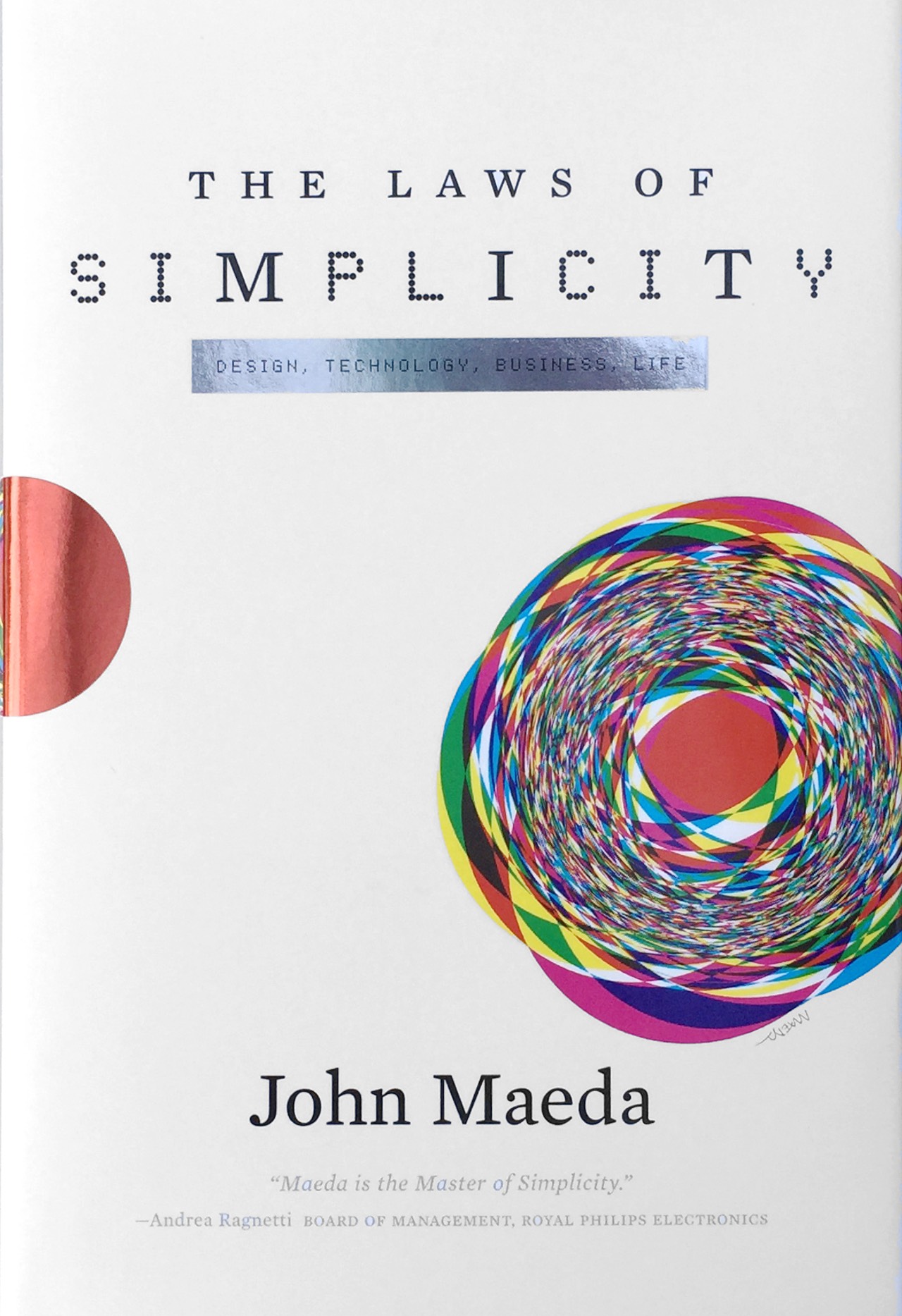










Tomorrow I will be appearing on NPR’s ON POINT to talk about The Laws of Simplicity from 11-12PM EST. In the process of releasing the LOS book to the public, I’ve discovered a great deal of sincere love for and, in equal quantities, unbounded distaste for the project. From people buying hundreds of copies for their divisions to unlock the secrets of simplicity in design, to individuals that want to use the book as a doormat (they probably have tiny feet as LOS is a smallish book). Who would have thought that an innocent topic like “simplicity” could carry such controversy?
This entry was posted
on Monday, November 13th, 2006 at 10:40 pm and is filed under seen.
You can follow any responses to this entry through the RSS 2.0 feed.
You can leave a response, or trackback from your own site.
2 Responses to “ON POINT”
Comments Area
NOTE: I reserve the right to edit or delete inappropriate comments. But I'm also a believer in free speech. Keep it simple.


Out of Our Minds
Seeing Red


John,
I listened to your On Point segment yesterday on XM. Had I been able to call in, I would have asked the question, “In regard to the ‘complexity’ of everyday technologies, to what extent do you think design complexity is the result of organizational dynamics - the intra-corporate negotiations and compromises that take place between marketers, industrial designers and engineers?”
That’s interesting Ira — a similar question came up at the Core77 Panel last night held here in Boston. The answer was probably more complex than it needed be. Perhaps this is another way to look at it: I was asked by BusinessWeek’s Bruce Nussbaum about what I felt was the secret to Jonathan Ive’s success at making great product designs at Apple. Let me preface this by saying I have enormous respect for Ive, and that I have even more respect for Jobs.
I think that Jobs is the secret simplifying sauce to making a complex system of people — as you put it “marketers, industrial designers, and engineers” and in addition production, sales, and so forth — produce a fabulous product outcome. Companies that have great ideas are a dime a dozen; companies that create great products from those great ideas are entirely rare because of the organizational frictions you raise.
Thus my response to Bruce was that you could have any great product designer (of course there are few) in the role of Ive, and Apple would still create great products because of a person with special leadership skills like Jobs (of which there are even fewer). I guess I’m a believer that strong leadership can simplify organizational complexities. Now, whether living under that kind of demanding leadership is bearable or not is a different question.
Thanks for the question Ira.