






» Visit the new RISD blog
»


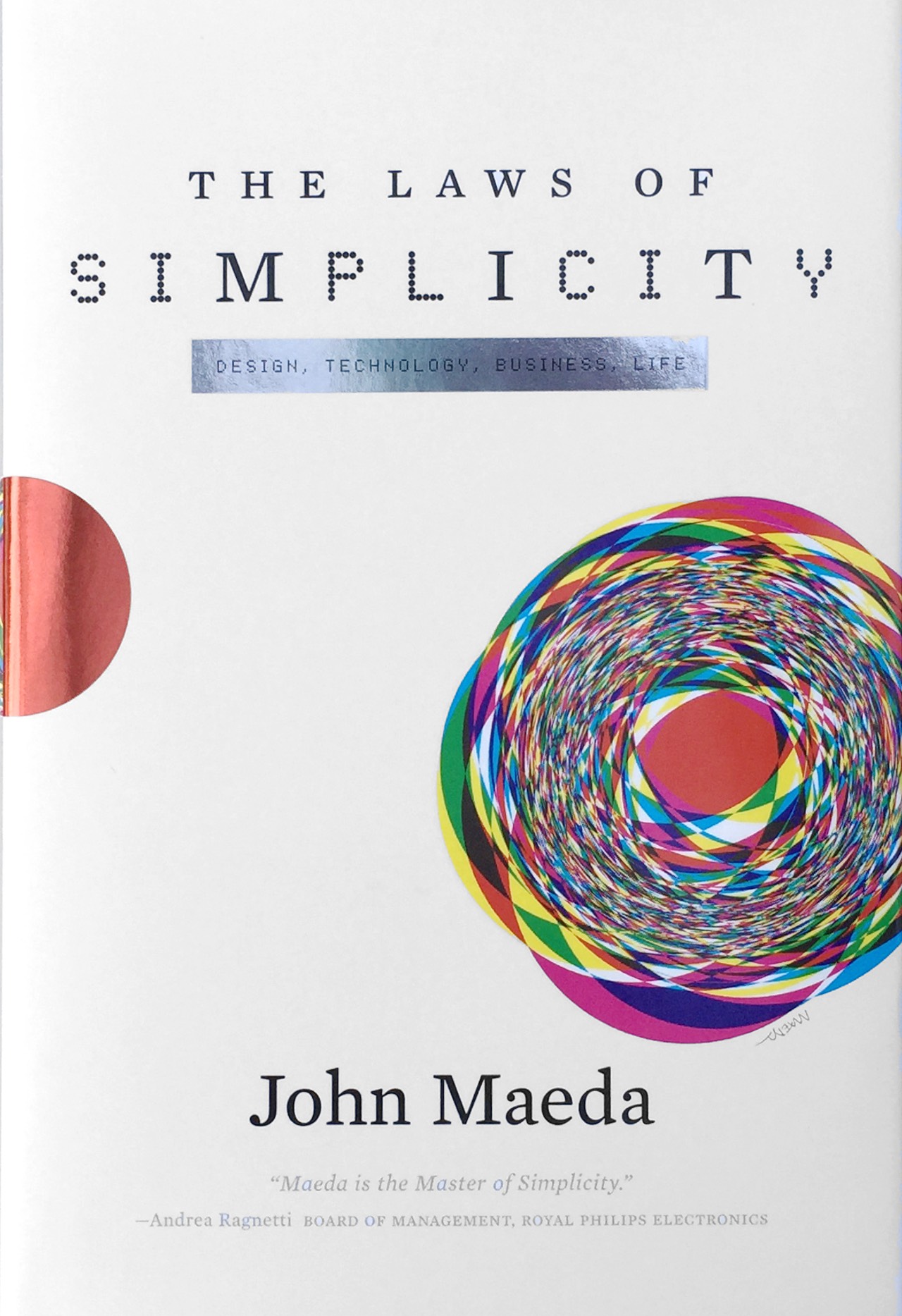
This book posits that to be organize-d is a bad thing. The authors argue that when you add up all the time you might spend cleaning up your office, that the actual time savings gained in finding things later falls short of the total time you spent cleaning. In other words, that there is no savings in time by being tidy. Furthermore they make a case for messiness as an all-important catalyst for being creative. Are they right? Well, given that they wrote a well-organized book, it sort of runs counter to their overall thinking …

This entry was posted on Sunday, July 8th, 2007 at 9:51 pm and is filed under books. You can follow any responses to this entry through the RSS 2.0 feed. You can skip to the end and leave a response. Pinging is currently not allowed.

12 Responses to “A Perfect Mess”


  1. They are right and they are wrong! You cannot generalize. Regarding organization and tidiness there are two very distinct attitudes: the perceiving and the judgmental attitude.

    A Perceiver would thrive in uncertainty, in messiness while the Judgmental would require tidiness. For a perceiver is simpler to don’t bother with the tidiness (it doesn’t matter) but for a judgmental is simpler to just do the necessary effort to keep things tidy because he/she cannot function properly in an messy place.

    Here is an article with more info on the subject:
    http://socionics.com/articles/irra.htm


  2. Thanks for the MBTI reference. How one perceives the value of simplicity versus complexity may indeed be hardwired.


  3. Although i haven’t read the book, in my own perception, os someone pretty messy (and who thanks any intent of theorizing about his lazyness :) ), i only get to order my office is someone’s paying a visit, specially if it is a client. Otherwise, although it looks terrible, it works for me, since i always find what im looking for.
    However, i think John has a nice point when pointing that a book about chaos is pretty ordered.
    Like we use to say in spanish spoken countrys, “la ropa sucia se lava en casa” (dirty laundry must be taken care at home), is all about your work for you/for others. As long as your work is inside your house, office, etc. can be as messy or as tidy as you like, but if you fail to show it in an ordered user-viewer-oriented way, either you’re tryng to confuse them since your work is not that good, or you definitely need to work a little more.


  4. My first reaction to your post, John, is that this embodies the necessity of establishing systems early on. I often feel that un-disorganizing myself, while personally satisifying, is not the best use of my time. Each time I feel this way, it further motivates me to be clean in the first place, making spending time tidying up unnecessary. A win-win situation.


  5. I agree that consciously disorganizing oneself makes little sense. The various subconscious rituals we have that tidy our homes and minds up are thankful parasites — low cognitive cost with high value for certain.


  6. Well, whether it saves time to NOT clean up depends on many things. Finding stuff you lost some where in all the piles of mess takes a lot of time as well. Once organized, keeping things that way might take very little time. If you have a good system in place, you only have to put an item in the right place just once, instead of throwing it on one pile, moving it a couple of times, searching for it a couple of times and finally putting it in the right spot.

    Also, personally I can’t work well when it’s a mess around me. When my desk is full of things distracting me. And not working well means I loose a lot of time.


  7. There’s a cost and benefit to every option. Choose the option that maximizes benefit minus cost (or is it benefit divided by cost?). I haven’t read the book, but have to agree with the many posters here who said that “it depends”.

    For email, I used to organize everything into folders, because the cost of organizing was lower than the cost of finding things later. However, with gmail I no longer use folders (labels), because the cost of finding things has gone down, making the unorganized option cheaper.

    Our intuition is built on years (maybe generations) of tradeoffs. As technology changes the costs and benefits of those options, the “best” option may change, but it will take a long time before our intuition and society’s guidelines will catch up.


  8. The notion of a good means of search as the key to circumventing the need to organize is powerful.Nice one, Amit! Regards, John


  9. Fascinating. Gmail is a composite of higher laws:

    Law 3 - Savings in (search) time feel like simplicity.

    Law 6 - What (algorithm) lies in the periphery of simplicity is definitely not peripheral.

    I’m sure there are more but I’m trying to keep the point simple.


  10. That’s not the point you (expletive). The book proves the pont exactly. The point is that you can do organized creative work because your not focused on the constant organization of other stupid shit.


  11. As one with a messy desk when I’m most creative, I can relate to that. Thanks. John


  12. This post is just tangent to the conversation, however I believe relevant.

    Regarding searching vs organizing… there is an other alternative: predicting what you need.

    There is a new software for the Mac called Sapiens that helps you launching applications. The cool thing is that it requires you not to search (unlike Spotlight), and not to organize (unlike the Dock). Sapiens knows the application you use and tries to predict the app you need at a given time. Pretty simple uh?

    You can watch a video introducing Sapines:
    http://www.donelleschi.com/sapiens/

Comments Area

NOTE: I reserve the right to edit or delete inappropriate comments. But I'm also a believer in free speech. Keep it simple.

(required)